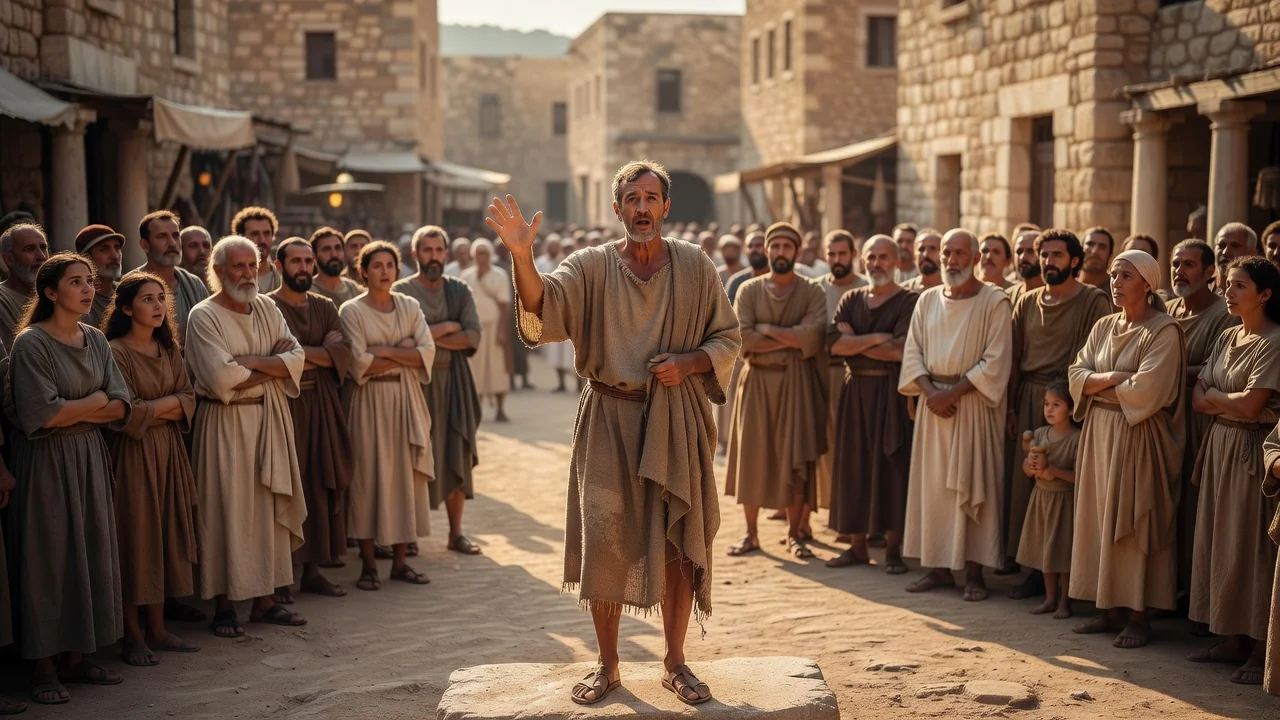
Did you know that one man was responsible for spreading the teachings of Christianity across three continents?
This extraordinary figure is the Apostle Paul, whose missionary journeys and profound teachings shaped the early Church and continue to influence millions today.
Understanding the life of Paul is essential not only for grasping the foundations of Christianity but also for recognizing the pivotal role he played in bridging diverse cultures and communities through his faith.
In this article, we will explore Paul’s incredible missionary journeys, delve into his key teachings, and uncover how his legacy still resonates in our lives and societies.
Introduction to The Life of Paul: His Missionary Journeys and Teachings
The life of Paul is a remarkable narrative that significantly influenced the spread of Christianity throughout the ancient world.
Born as Saul of Tarsus, Paul initially persecuted Christians before experiencing a profound transformation on the road to Damascus.
This pivotal moment marked his conversion to Christianity, changing the course of his life and, ultimately, the lives of countless others.
Paul’s missionary journeys were critical in establishing early Christian communities across the Roman Empire.
His travels took him through regions such as Asia Minor and Europe, where he preached the gospel and founded several churches.
Notably, his letters, or epistles, addressed to these communities not only provided guidance but also clarified theological principles, making significant contributions to Christian doctrine.
According to historical accounts, Paul’s efforts led to a substantial increase in the number of believers, helping to spread Christianity beyond its Jewish roots.
His journey exemplifies the importance of personal transformation and the dedication to spreading faith in diverse cultures.
To further understand the teachings that shaped his mission, one can explore related resources like Understanding the Parables of Jesus.
The Early Life of Paul: Context and Background
The early life of Paul, also known as Saul of Tarsus, played a crucial role in shaping his future missions and teachings. Born in Tarsus, a city in Cilicia, Paul was raised in a Hellenistic environment, which exposed him to both Roman culture and Greek philosophy.
His Jewish heritage was central to his identity, as he belonged to the tribe of Benjamin and was a Roman citizen, providing him with unique advantages throughout his life.
Education was highly valued in his family, and Paul received rigorous training under the esteemed rabbi Gamaliel in Jerusalem. This education was pivotal in developing his understanding of Jewish law, Scripture, and the traditions of the Pharisees.
As a Pharisee, Paul was deeply committed to the law, which later influenced his theological perspectives and arguments in his epistles.
Initially, Paul was a fervent persecutor of Christians, believing he was defending the Jewish faith against what he viewed as a dangerous sect.
He took part in the stoning of Stephen, one of the first Christian martyrs, which marked him as a key figure in the early persecution of believers.
His zeal and passion during this period demonstrate the dramatic transformation he would later undergo after his conversion.
Understanding Paul’s early life is essential, as it sets the stage for his subsequent missionary journeys and profound teachings on faith and grace.
For further insights into biblical teachings, you can explore Understanding the Parables of Jesus.
Paul’s First Missionary Journey: Spreading the Gospel
Paul’s first missionary journey was a pivotal moment in the spread of early Christianity.
Commissioned by the Holy Spirit, Paul, along with Barnabas, embarked on this journey around AD 47.
Their travels took them primarily through regions of modern-day Turkey, starting from the island of Cyprus and extending to places like Antioch in Pisidia.
This journey not only marked the beginning of Paul’s extensive missionary work but also set the stage for the establishment of Christian communities across the Mediterranean.
During their time in Cyprus, they preached in synagogues and performed miracles, which captivated many.
Notably, Paul confronted the sorcerer Elymas, demonstrating the power of faith and the message of Jesus Christ.
This encounter showcased the challenges Paul faced, including resistance from those who opposed his teachings.
Despite such challenges, they gained followers, illustrating the impact of their mission on early Christian communities.
As they traveled to Antioch, they faced further obstacles, including persecution and imprisonment.
However, these experiences only strengthened their resolve.
In Antioch, Paul delivered a powerful sermon that emphasized the resurrection of Jesus, leading to a significant number of conversions.
The fruits of this journey resulted in the establishment of churches, which became vital centers for worship and community.
Ultimately, Paul’s first missionary journey was marked by both triumph and adversity.
It not only spread the gospel but also laid the foundation for future missions.
The lessons learned during this journey resonate with the ongoing mission of spreading the message of love and forgiveness, akin to the teachings found in 18 Bible Verses About Forgiveness and God’s Mercy.
This journey exemplified how faith can overcome obstacles and transform lives.
Paul’s Subsequent Missionary Journeys: Expansion of the Church
The Apostle Paul’s second and third missionary journeys represent pivotal moments in the early expansion of the Christian Church.
After his first journey, where he established several congregations, Paul set out again to spread the gospel further across the Roman Empire.
His second journey, which began around AD 49, took him through cities like Thessalonica, Berea, and ultimately to Corinth.
In Corinth, he engaged with both Jews and Gentiles, leading to the formation of a vibrant church community.
Paul’s Second Missionary Journey and Key Epistles
During this period, Paul’s teachings emphasized the importance of faith and grace, which became foundational doctrines of Christianity.
In Corinth, he spent **eighteen months**, establishing the church and mentoring its members.
This city was significant due to its strategic location and diverse population, providing a fertile ground for the growth of Christianity.
His letters to the Corinthians would later become some of the most influential texts in the New Testament, addressing issues like morality and church unity.
Paul’s Third Missionary Journey and Pastoral Leadership
Paul’s Third Missionary Journey and Pastoral Leadership occurring around AD 53, further solidified his role as a key figure in the early church.
He revisited many of the communities he had previously established, strengthening them and addressing emerging challenges.
One of his notable stops was Ephesus, where he spent over two years preaching and performing miracles.
This journey not only reinforced existing churches but also highlighted the importance of discipleship and mentorship.
Through his travels, Paul contributed significantly to the New Testament, with many of his letters providing theological insights and practical guidance for early Christians.
His epistles became vital resources, shaping Christian doctrine and practice.
Therefore, Paul’s missionary journeys were not just about spreading the gospel; they were instrumental in laying the groundwork for the Church as we know it today.
For those interested in understanding the broader context of biblical teachings, resources like Understanding the Parables of Jesus are invaluable.
The Legacy of Paul: Impact on Christianity
The Apostle Paul has left an indelible mark on Christianity, shaping its doctrines and practices through his extensive writings and missionary journeys.
His letters, which comprise a significant portion of the New Testament, articulate foundational Christian beliefs and ethical teachings.
For instance, in his epistles, Paul emphasizes the importance of faith in Jesus Christ as the pathway to salvation, a concept that remains central to Christian theology today.
Furthermore, Paul’s role in the establishment of Christian doctrine cannot be overstated.
He was instrumental in defining key theological concepts such as grace and justification.
In Romans 3:28, Paul states, “For we hold that one is justified by faith apart from works of the law,” highlighting a shift from adherence to Jewish law toward faith-based salvation.
This was revolutionary and laid the groundwork for many Christian denominations that followed.
Moreover, Paul’s missionary journeys facilitated the spread of Christianity throughout the Roman Empire, reaching diverse cultures and populations.
His ability to adapt his message to different audiences is exemplified in his address to the Athenians, where he contextualizes the Gospel using local philosophy and culture.
His legacy as a foundational figure is evident in the way his teachings continue to influence Christian thought and practice today.
For an in-depth exploration of related teachings, consider reading Understanding the Parables of Jesus: Meaning and Life Lessons.
Conclusion
In this article, we have delved into the remarkable life of Paul, highlighting his missionary journeys and teachings.
His unwavering commitment to spreading the Gospel has not only shaped the early Church but continues to inspire countless individuals today.
Now is the time to reflect on your own journey: consider how you can embody the transformative spirit of Paul’s teachings in your daily life.
The legacy of Paul offers a beacon of hope and guidance, reminding us that each of us has the potential to make a significant impact in the world.

About the Author: Amy Smith
Amy Smith is a Christian author, Bible teacher, and devotional writer with over a decade of ministry experience. She holds a Bachelor of Arts in Theological Studies and is passionate about helping individuals and families deepen their faith, understand Scripture in its historical context, and cultivate a transformative daily prayer life.