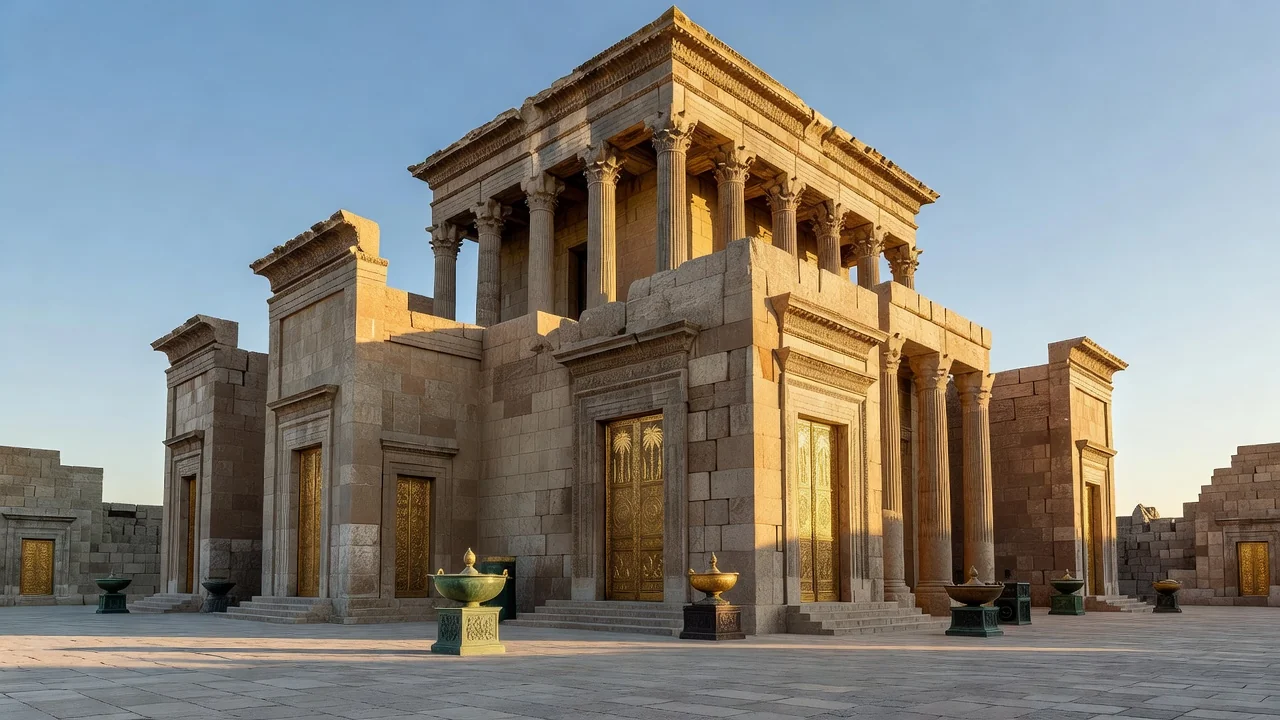
Did you know that the Temple of Solomon was not just a religious structure, but a symbol of a nation’s identity?
This iconic edifice, steeped in history and purpose, has captivated scholars and enthusiasts alike for centuries.
Understanding the history, purpose, and significance of the Temple of Solomon is crucial to grasping the cultural and spiritual landscape of ancient Israel, and its impact resonates even today.
In this article, we will explore the origins of the Temple, its architectural marvels, and the profound lessons it offers to modern society.
Overview of The Temple of Solomon: History and Background
The Temple of Solomon stands as a monumental symbol of faith and culture in ancient Israel. Constructed in the 10th century BCE, it was built during the reign of King Solomon, the son of David, who sought to create a permanent dwelling for the Ark of the Covenant.
This temple was not merely a place of worship; it represented the religious aspirations of the Israelites and their desire for a strong national identity.
The historical context of the Temple’s construction is essential to understanding its significance.
Following the period of the Judges, Israel transitioned into a monarchy.
King Solomon’s reign marked a time of prosperity and peace, which facilitated the ambitious project of the Temple.
The location was strategically chosen on Mount Moriah, a site of deep religious significance, believed to be where Abraham nearly sacrificed Isaac.
This connection added layers of meaning to the Temple as a sacred space.
Moreover, the cultural and religious importance of the Temple cannot be overstated.
It served as the central point of Jewish worship and identity, where rituals and sacrifices were performed, reinforcing the community’s bond with God.
The Temple also housed the Ark of the Covenant, which was considered the physical manifestation of God’s presence on Earth.
Thus, the Temple became a focal point for the Israelites, as discussed in the article The History of Jerusalem in the Bible: A Complete Overview.
Key figures involved in the Temple’s design included skilled artisans and craftsmen, such as Hiram of Tyre, who provided materials and expertise.
The construction utilized the finest materials, showcasing the wealth and artistry of the era.
Ultimately, the Temple of Solomon was more than a building; it was a testament to the religious devotion and cultural heritage of the Israelite people.
Purpose of The Temple of Solomon: Spiritual and Social Functions
The Temple of Solomon served as a monumental symbol of the religious and cultural identity of the ancient Israelites.
At its core, the Temple was primarily a place of worship and sacrifice.
This sacred site was not just a physical building but a spiritual center where the Israelites could connect with God.
The rituals conducted within its walls were vital for maintaining their covenant relationship with the divine.
For instance, the offering of sacrifices was a way to atone for sins and express gratitude.
These acts were deeply ingrained in the religious life of the ancient Israelites, emphasizing the need for physical and spiritual cleanliness.
Moreover, the Temple’s architecture and layout were designed to reflect its sanctity.
The innermost chamber, known as the Holy of Holies, housed the Ark of the Covenant, which was believed to contain the tablets of the Law given to Moses.
This area was so sacred that only the High Priest could enter, and only once a year, during Yom Kippur, the Day of Atonement.
This exclusivity underscored the importance of the Temple as a spiritual hub where divine presence was believed to dwell.
The Role of the Temple in Religious Life
The Temple also played a pivotal role in the religious life of the ancient Israelites.
It was the site of major festivals and gatherings, such as Passover and Sukkot, where communities came together to celebrate their faith and heritage.
These occasions strengthened communal bonds and reinforced their shared identity as God’s chosen people.
The Temple was not merely a location for individual worship; it was a vibrant center for community life.
Additionally, the presence of the Temple in Jerusalem had significant social and political implications.
It represented the unification of the tribes of Israel under a centralized worship structure.
This centralization helped solidify the authority of the Davidic monarchy and the priesthood.
As a result, the Temple became a symbol of national unity and religious devotion, influencing both governance and daily life.
The Spiritual Atmosphere of the Temple
In summary, the Temple of Solomon was more than a religious edifice; it served as a cornerstone of spiritual life and social structure for the ancient Israelites.
Its importance extended beyond the individual to encompass community identity and political authority.
Understanding its multifaceted role provides deeper insights into the cultural and religious landscape of ancient Israel.
For those interested in further exploring this rich history, consider reading about the history of Jerusalem in the Bible.
Significance of The Temple of Solomon: Cultural and Historical Legacy
The Temple of Solomon holds a profound significance that extends beyond its physical structure. It is regarded not only as a religious site but also as a cultural and historical symbol that has influenced various aspects of Jewish and Christian practices.
The Temple’s influence on later Jewish and Christian practices is noteworthy.
For Jews, the Temple represents the center of worship and the location where divine presence dwelled.
It established the blueprint for subsequent synagogues, emphasizing communal worship and the importance of prayer.
Similarly, for Christians, the Temple symbolizes the transition from the physical to the spiritual, representing how Jesus’ teachings fulfilled the prophecies associated with the Temple.
Moreover, the Temple’s cultural representations are prevalent in literature and art throughout history.
From the poetic verses in the Psalms to the majestic paintings of the Renaissance, artists have drawn inspiration from the grandeur of the Temple.
These cultural references reflect not only admiration but also a longing for the spiritual connection that the Temple embodied.
Throughout the ages, the Temple has maintained its symbolic meaning.
It stands as a testament to the resilience of the Jewish people and their enduring faith.
The destruction of the Temple and the subsequent diasporas have only deepened its significance, representing hope for restoration and a unifying element in Jewish identity.
This legacy continues to resonate today, illustrating how the Temple of Solomon transcends its historical context.
In conclusion, the Temple of Solomon is more than an ancient structure; it is a profound symbol of faith, culture, and community that continues to shape religious practices and cultural expressions across generations.
Modern Interpretations and Relevance of The Temple of Solomon
The Temple of Solomon continues to resonate profoundly in contemporary discussions, reflecting its rich history and enduring significance.
Throughout the years, archaeological discoveries have sparked interest and debate regarding the Temple’s existence and its architectural marvels.
Excavations conducted in Jerusalem have unearthed remnants that many scholars believe are linked to the Temple, providing tangible evidence of its grandeur and importance within ancient Israelite society.
Beyond historical context, the Temple has become a focal point for theological discussions in the modern era.
Various religious traditions interpret the Temple’s purpose and meaning differently, illustrating its multifaceted significance.
For instance, in Judaism, the Temple represents a place of divine presence and spiritual connection, while in Christianity, it is often seen as a precursor to the teachings of Jesus and the concept of the body as a temple.
This diversity of interpretations enriches religious dialogue, encouraging interfaith discussions about the nature of worship and sacred spaces.
Moreover, the role of the Temple of Solomon in contemporary religious dialogues cannot be overlooked.
It serves as a symbol of hope and restoration for many, especially among Jewish communities who yearn for the rebuilding of the Temple in Jerusalem.
This aspiration is often discussed in the context of religious prophecies and eschatology, linking the Temple’s historical significance to future expectations.
Such discussions underscore the Temple’s role not only as a physical structure but as a powerful symbol of faith, identity, and continuity.
In summary, the Temple of Solomon’s modern interpretations highlight its enduring relevance.
As a subject of archaeological inquiry and theological reflection, it continues to inspire discussions surrounding faith, history, and cultural identity.
Conclusion
Throughout this article, we delved into the rich tapestry of The Temple of Solomon: History, Purpose, and Significance.
This magnificent structure is not just a relic of the past; it represents the spiritual aspirations and cultural identity of a civilization.
Now is the time to explore its relevance in your life: reflect on how the lessons from The Temple of Solomon can inspire your personal journey.
Embrace the legacy of The Temple of Solomon, and let its story guide you toward greater understanding and purpose!

About the Author: Amy Smith
Amy Smith is a Christian author, Bible teacher, and devotional writer with over a decade of ministry experience. She holds a Bachelor of Arts in Theological Studies and is passionate about helping individuals and families deepen their faith, understand Scripture in its historical context, and cultivate a transformative daily prayer life.